
Find out which financial instruments will protect you from bear market volatility.
SpiceJet Ltd., an Indian budget airline, will likely to sell a foreign currency convertible bond worth $90 million by early September to raise money for more plane purchases, a company executive said Wednesday.
How could we have been so wrong? Nothing but love for these tech moguls, then and now.
Rupert Murdoch's international financial daily The Wall Street Journal, published by Dow Jones & Company, is all set to launch its facsimile edition in India next month. The newspaper, to be launched in Mumbai, is likely to be priced at Rs 30 a copy.
The NSE Nifty ended at 3,513, down 93 points. The market breadth was extremely negative - out of 2,652 stocks traded, 2,164 declined, 442 advanced and the rest were unchanged on Wednesday.
On the contrary, the fall in the US markets was lower with the S&P 500 and Dow Jones both declining by around 9 per cent and 6 per cent respectively, while emerging markets lost around 18 per cent during the month. Pessimism in the financial markets following the filing for bankruptcy by Lehman Brothers, Merrill Lynch's sell-off, the AIG bailout and perceived uncertainty around the US bailout package added to investor fears.
Continuing population growth and development of a modern economy propelled by advanced technology is likely to push India's GDP past that of China by the middle of the century, according to economist Paul Erdman.
The Reserve Bank of India and the Securities and Exchange Board of India are considering a proposal for allowing Indian mutual funds to invest up to $1 billion in world's biggest companies through equity indices like Dow Jones Global Titans Index.

In China, the toll stood at around 3,250 and in Italy it was 3,405.

The three stocks from the Sensex that managed to break the trend in the falling markets are from the FMCG and pharmaceuticals space
While the M1 Group, which holds 9.8 per cent in MTN, today backed Bharti's bid, Singapore Telecommunications said it has no objection to the acquisition.
As the economy teeters between bad and worse, one question looms: What's the best course of action? Here's what can be done. And what can't
What should you do when the markets crash by as much as 1,500 points? Buy, sell, hold or add more to your long-term portfolio.

Indian passenger vehicles market registered record wholesales of 43 lakh units in 2024, with companies like market leader Maruti Suzuki, Hyundai, Tata Motors, Toyota Kirloskar Motor, and Kia posting their best-ever annual domestic sales. The continued growth of SUVs, along with rural markets playing a key role in driving up car sales, helped the industry better the previous best of nearly 41.1 lakh units posted in 2023.
Even before the Wall Street the world's stock market hub in New York - opened on the 20th anniversary of the original Black Monday today, the domestic stock market's benchmark Sensex plunged over 438 points.
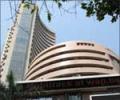
The NSE Nifty shut shop at 4,914, up 58 points.
They prefer foreign markets owing to comparatively lower margins than Indian exchanges.

The Nifty closed below the 5,000 mark for the first time in seven days and the Sensex ended below the 17,000 mark. The market breadth was fairly negative. Out of 2,825 stocks traded on the BSE, 1,875 declined and 871 advanced.

The Nifty closed at 5,114, lower by 27 points. The market breadth was fairly negative. Of 2,844 shares traded on BSE, 1,471 declined, and 1,322 rose.

The Nifty also traded in a narrow range on either side of the 5000 mark before closing abover the 5000 mark yet again. It ended at 5006, up 47 points. The market breadth was positive. Out of 2852 stocks traded on he BSE, there were 1,655 advancing stocks as against 1,111 declines.
The NSE Nifty ended at 3545, up 54 points. The market breadth was fairly positive - out of 2,683 stocks traded, 1,654 advanced, 974 declined and 55 were unchanged on Tuesday.
The US Fed also said that the unemployment rate too would rise to 5.7 per cent.

Investors' wealth eroded by more than Rs 2.21 lakh crore in early trade on Wednesday, with the market witnessing a selling-off amid prospects of aggressive rate hikes by the US Federal Reserve to tackle high inflation, and sluggish global trends. In less than an hour of the start of trading on Wednesday, the key indices -- Sensex and Nifty -- were deep in the red and witnessed significant volatility, reflecting jittery investor sentiments. The market capitalisation of BSE-listed companies, which is also an indicator of wealth of investors, tumbled more than Rs 2.21 lakh crore to Rs 2,84,49,727.56 crore amid the 30-share Sensex falling 564.76 points to 60,006.32 points.

Infosys slipped nearly 9% after the company cut full year revenue outlook for FY17.
The Sensex is holding on to its gains on steady gains in techs, PSUs and heavyweights, and is now up 32 points

Major global indices - the Nasdaq, Bovespa, Seoul Composite, S&P 500, Dow Jones, S&P BSE Sensex, NYSE, DAX, Nikkei and, CAC 40 - have all gained 37 per cent to 75 per cent since their respective March 2020 low.

Benchmark BSE Sensex rose by 319 points on Monday on gains in IT and financial stocks after positive quarterly results amid supportive global cues. The 30-share BSE barometer rose by 319.90 or 0.53 per cent to close at 60,941.67. The index opened higher and gained more than 400 points to scale the 61,000 level. It touched a high of 61,113.27 and a low of 60,761.88 in the day.

Among Sensex shares, HDFC Bank fell the most by 2.58 per cent, followed by SBI (2.12 per cent), HDFC (2.09 per cent), and IndusInd Bank (2.02 per cent). Axis Bank, Bajaj Finserv, M&M, L&T, Reliance, Infosys and TCS were among the major losers. In contrast, Tata Motors, Maruti, NTPC, Sun Pharma, Power Grid and Titan were among the gainers.

M&M was the biggest loser in the Sensex chart, falling 6.39 per cent, followed by Tech Mahindra, Nestle India, Bajaj Finance, Axis Bank, ITC, JSW Steel, HDFC Bank and RIL. On the other hand, Sun Pharma, Tata Motors, Bharti Airtel, L&T and Infosys were among the winners, rising up to 2.10 per cent.

Technical fault was the reason behind it.
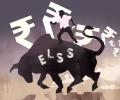
Fund managers of large-cap and equity-linked saving schemes (ELSS) have demonstrated a marked improvement in their performance over the past year, according to the latest SPIVA (S&P Indices Versus Active) report released by S&P Dow Jones Indices. In the one-year period ending June 2023, 17 per cent of active large-cap schemes outperformed the S&P BSE 100, compared to just 9 per cent at the end of June 2022. In the case of ELSS, there was a sharp improvement in performance, with 66 per cent of active schemes delivering better returns than the benchmark S&P BSE 200.

Raking up the issue of 1984 riots, Bharatiya Janata Party leader Arun Jaitley on Monday alleged that those guilty for the "state sponsored" violence still remain unpunished.

'India's fundamentals are a lot better (than those of other emerging market economies).' 'India will suffer (witness a fall in its stock market) what I call the second order effect.' 'And the second order will happen when these funds (belonging to macro and hedge fund investors and which have leveraged Japanese yen-carry trades), because they lose money elsewhere as lot of their positions were financed by borrowing Japanese yen, will have to book profits in investment destinations where they are making money, including in markets like India.' 'They (these investors) will have to effectively sell in countries like India and which is the consequence (the crash in equity markets) that Indian markets might see.'

Over 87 per cent of active large-cap schemes failed to outperform the benchmark S&P BSE 100 (total return) in the 2022 calendar year (CY), significantly higher than the 2021 figure of 50 per cent, shows a report by S&P Dow Jones Indices. During the three-year period (CY 2020, '21, '22), the percentage of schemes underperforming the index was even higher at 97 per cent. While active large-cap schemes generally find it tough to outperform due to a rising efficiency in the market, 2022 proved to be even more challenging as mid-cap and small-cap stocks (where they have some allocation) performed poorly vis-a-vis the large-caps.

Benchmark Sensex trimmed early gains to close marginally higher while Nifty settled flat in choppy trade on Tuesday as gains in auto shares were offset by selling pressure in banking and energy shares. The 30-share BSE barometer closed marginally up by 37.08 points or 0.06 per cent to 60,978.75 with 15 of its stocks ending in green and the rest in red. The index opened higher and gained over 300 points to a high of 61,266.06 in early trade.

Tech Mahindra was the top laggard in the Sensex pack, followed by Tata Steel, Mahindra and Mahindra, HCL Tech, Infosys, SBI and Bajaj Finance.
